
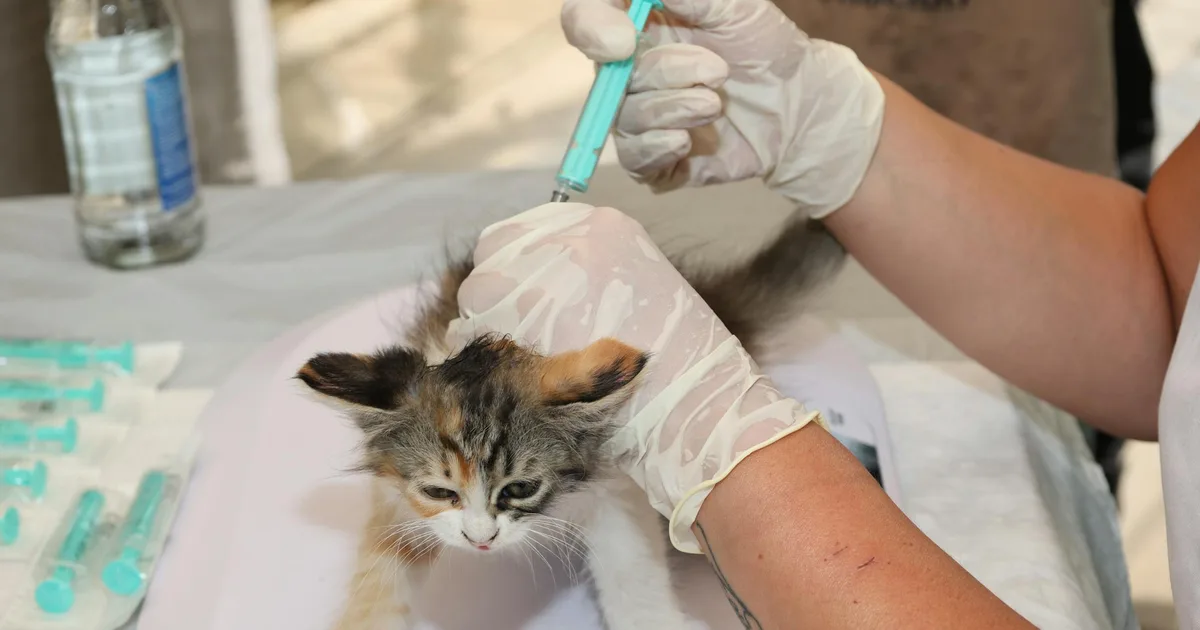
Although cats spend most of their time at home, they are not free of health risks. Viruses like feline panleukopenia can enter a household stuck to shoe soles, and Mexican law requires the rabies vaccine even for strictly indoor cats. Knowing which vaccines are mandatory and which are recommended for your cat is the best way to protect them throughout life.
This guide explains which vaccines a cat should receive in Mexico, at what age, which are legally required, and why even a cat that never goes out needs to be vaccinated.
Which cat vaccines are mandatory in Mexico?
In Mexico, the only vaccine mandatory by law for cats is the rabies vaccine. The feline triple vaccine is not legally required, but it is the standard of care at any veterinary clinic and essential for boarding, surgery, and international travel.
- Rabies: mandatory by state and federal law, from 3 months of age, annual booster.
- Feline triple (FVRCP): highly recommended for all cats. Protects against 3 serious diseases.
- Feline leukemia (FeLV): recommended for cats with outdoor access or living with other cats.
- Others (FIP, chlamydia, bordetella): only in specific risk situations.
Feline triple: what does it protect against?
The feline triple (FVRCP) protects against three viral diseases still circulating in Mexico, all potentially fatal for unvaccinated cats:
Feline viral rhinotracheitis (herpesvirus)
Main cause of feline flu. Causes sneezing, nasal and ocular discharge, fever, and corneal ulcers. Cats that survive without treatment can become chronic carriers, with relapses throughout life.
Feline calicivirus
Another respiratory virus. Typically causes painful ulcers on mouth and tongue, preventing eating. Recent hypervirulent strains have high mortality even in vaccinated cats, so keeping the schedule up to date is critical.
Feline panleukopenia
The feline equivalent of parvovirus. Destroys white blood cells and intestinal lining. Mortality above 90% in unvaccinated kittens. The virus survives over a year in the environment, so it can enter the home on shoes or clothing.
Feline vaccination schedule step by step
This schedule is the most used by Mexican veterinarians for healthy kittens without special background:
6 to 8 weeks: first feline triple
First dose. Until now, maternal immunity was sufficient; now it is time to activate the kitten's own immunity.
10 to 12 weeks: feline triple booster
Second dose. In cats at risk (multi-cat household, outdoor access), this is also when the FeLV test and first dose are applied.
14 to 16 weeks: rabies
Third visit: final triple booster and mandatory rabies vaccination. If FeLV was started, its booster as well. Your cat is protected upon completing this visit.
Annual boosters
Every 12 months: feline triple + rabies + FeLV if applicable. Some modern triple vaccines protect up to 3 years, but rabies is usually applied annually to keep the official certificate current.
Feline leukemia vaccine (FeLV)
Feline leukemia is a retrovirus (conceptually similar to human HIV, but not transmissible to people) that weakens the immune system and causes cancer in cats. It is transmitted through saliva, blood, and secretions; cats that fight, share dishes, or groom each other are at risk.
We recommend FeLV vaccination for:
- Cats with outdoor access, even occasional.
- Cats in multi-cat households (especially if new cats join).
- Young cats during their first year of life, as they are most susceptible.
- Rescued or adopted cats with unknown history.
Before applying FeLV, we recommend a quick test (blood sample, results in 10 minutes) to rule out that the cat is already infected. Vaccinating a positive cat will not help and may cause false negatives in future tests.
Does my indoor cat need vaccines?
Yes. Even if your cat never leaves home, vaccination is still necessary for three reasons:
- The law: the rabies vaccine is mandatory in BC regardless of whether the cat goes out.
- Indirect vectors: the panleukopenia virus enters the home on shoes, clothing, or hands. Enough to infect an unprotected cat.
- Escapes and emergencies: an unvaccinated cat that escapes, goes to boarding, or needs surgery cannot receive care without a complete schedule.
Aftercare after feline vaccination
Cats usually show subtler reactions than dogs. It is normal to observe during 24 to 48 hours:
- Lethargy and more sleep hours.
- Reduced appetite for one or two meals.
- Sensitivity or small swelling at the injection site.
Call your veterinarian immediately if your cat shows persistent vomiting, diarrhea, breathing difficulty, facial swelling, or hides without moving for more than 24 hours. These signs require urgent evaluation.
Where to vaccinate your cat in Ensenada?
At Medical Pets Ensenada we apply the complete feline vaccination schedule with certified vaccines, record each dose in an official booklet, and issue the rabies certificate required for legal procedures. We use gentle protocols to reduce stress during the visit: pheromones, separate room, and respectful handling.
If you have never taken your cat to the veterinarian or you adopted it without history, schedule an initial assessment and we will build the schedule together.
Frequently asked questions
Can my cat be vaccinated if it never leaves home?
Yes, and it should be. Rabies is mandatory by law regardless of whether the cat goes out. Also, viruses like panleukopenia enter the home on shoes or clothing; an unvaccinated cat can be infected even living strictly indoors.
I bought an adult cat without vaccination history. What do I do?
Your veterinarian will start the schedule from scratch: two doses of feline triple 3 to 4 weeks apart, plus rabies. For FeLV a quick test is done first. In healthy adult cats the schedule is completed in approximately a month.
Does the feline triple also protect against FIV (feline AIDS)?
No. FIV (Feline Immunodeficiency Virus) is not prevented by the triple. A specific FIV vaccine exists in some countries, but its use is controversial and uncommon in Mexico. The best prevention is avoiding fights, neutering, and reducing contact with stray cats.
How long do vaccine antibodies last in cats?
The feline triple generates immunity lasting 1 to 3 years depending on the vaccine brand. Rabies protects at least 1 year (some brands up to 3). In practice, we recommend annual boosters to keep the rabies certificate current and because immunity varies between individuals.
Can I vaccinate a pregnant or nursing cat?
Generally live vaccines are not recommended during pregnancy. The feline triple comes in inactivated versions that can be used, but ideally the cat is vaccinated before getting pregnant. Consult your veterinarian if your cat is pregnant or nursing.
Are cat vaccines different from dog vaccines?
Yes, completely. The viruses affecting cats (feline herpesvirus, calicivirus, panleukopenia, feline leukemia) are different from canine ones. Vaccines are species-specific and not interchangeable. The only vaccine that shares the same active principle between dogs and cats is rabies.