
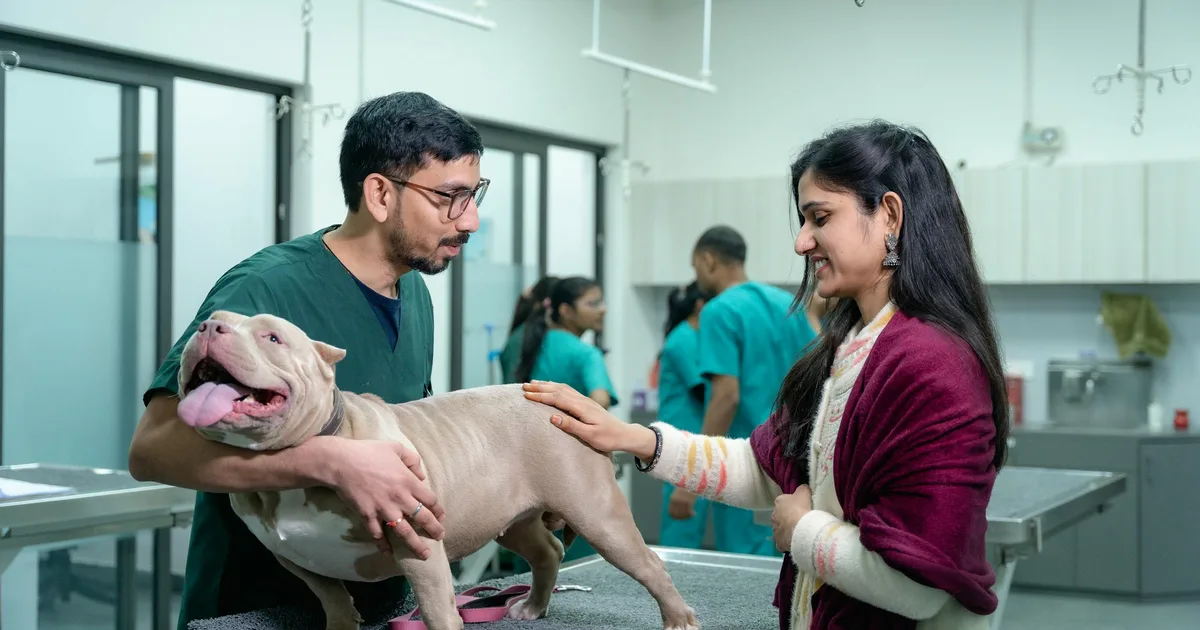
Neutering male dogs is one of the most common surgeries in veterinary medicine, but also one that carries the most myths. Some owners see it as an obvious decision, others as something "cruel" that changes their dog's essence. The reality is more nuanced: neutering has real well-documented benefits, but it is not the magical solution for behavior problems many people believe.
In this guide we review exactly what neutering does, at what age depending on dog size, what evidence-backed benefits to expect (and which not to), and resolve the most frequent doubts in consultation.
What is neutering in male dogs?
Neutering (technically orchiectomy) is the surgery where both testicles are removed through a small incision in the scrotal or pre-scrotal region. It is simpler and faster than spaying females: lasts 15 to 30 minutes, the wound is small, and recovery is quick.
Removing the testicles almost completely eliminates testosterone production, generating both physical changes (no testicular cancer risk) and behavior changes related to this hormone.
At what age to neuter a male dog?
Ideal age depends on dog size and breed. Important because early neutering in large breeds can affect bone growth plate closure:
Small breeds (under 15 kg)
Between 6 and 9 months. At this age they have completed bone growth and testosterone has not yet consolidated behaviors like marking or inter-male aggression.
Medium and large breeds (15-30 kg)
Between 9 and 12 months. Allows proper growth plate closure.
Giant breeds (over 30 kg)
Between 12 and 18 months. Studies in Golden Retriever, Labrador, and German Shepherd suggest that very early neutering can slightly increase the risk of some cancers (osteosarcoma, lymphoma) and orthopedic issues. Waiting physical maturity better balances risks.
Cryptorchid dogs (undescended testicles)
If your dog has one or both testicles retained in the abdomen, we recommend neutering as soon as possible after 6 months. Retained testicles have 13 times more cancer risk than normal ones.
Real benefits (with evidence)
- Elimination of testicular cancer: no testicles, no risk. Testicular cancer is the second most common in intact males.
- Reduction of benign prostatic hyperplasia (BPH): almost all older intact dogs develop prostate enlargement. Neutering reverses it.
- Elimination of hormone-dependent perianal tumors: common in older intact dogs.
- Reduction of urine marking: real but partial effect. Better result if neutered before behavior consolidates.
- Reduction of escape for reproduction: without hormonal drive for females in heat, the dog seeks less to escape.
What neutering does NOT solve (important)
This is where many owners have wrong expectations. Neutering:
- Does NOT cure fear or territorial aggression: these behaviors are not hormone-dependent. They resolve with behavioral training, not surgery.
- Does NOT make the dog "calmer" or "less energetic": personality and activity level do not change substantially. If your dog is hyperactive, he will remain so.
- Does NOT take "his maleness" away: a human concept, not a dog experience. Your pet does not feel less himself.
- Does NOT resolve excessive barking: barking is communication and depends on temperament and training.
Risks and disadvantages
- Anesthesia reactions: rare in healthy young dogs (less than 1 in 1,000).
- Weight gain: metabolism drops 10-15%. If you do not adjust diet and exercise, he gains weight. Manageable.
- Some cancers slightly increase: in specific large breeds (especially Golden Retriever), early neutering is associated with higher osteosarcoma and lymphoma risk. That is why we recommend waiting bone maturity.
- Urinary incontinence: very uncommon in males (more common in spayed females).
Chemical vs surgical neutering
A reversible alternative exists: chemical neutering with subcutaneous Suprelorin (deslorelin) implant. Reduces testosterone for 6 to 12 months after a single application. Useful for:
- Evaluating how your dog would respond to neutering before deciding permanent surgery.
- Dogs with contraindications for general anesthesia.
- Breeding dogs temporarily out of use.
After 6-12 months the effect disappears and fertility returns. Does not replace surgical neutering as long-term solution, but useful in specific cases.
Myths we hear in consultation
"I will make him less of a male"
Human concept without equivalent in the dog's experience. Your pet does not suffer identity loss. He remains the same dog you know, without the hormonal drive that distracted him or got him in trouble.
"He will inevitably get fat"
Not inevitable. Reducing ration by 10-15% and maintaining regular exercise controls weight without problem.
"It is cruel"
Surgery is under general anesthesia (no pain) with post-op pain control. Recovery is fast. What is ethically questionable is allowing unplanned litters that end in abandonment.
"My dog is sad after neutering"
Dogs do not experience grief from surgery. If apathetic 1-2 days post-surgery, it is from analgesics and the incision. By day 3-4 he is normal.
The process at Medical Pets
At Medical Pets Ensenada we manage:
- Clinical evaluation + pre-surgical analysis to rule out contraindications.
- Balanced anesthesia with continuous monitoring (heart rate, oxygenation, temperature).
- Minimally invasive surgical technique, small incision.
- Pre, intra, and postoperative pain control.
- Suture removal at 10-14 days.
Schedule an assessment and we resolve your doubts before deciding if and when to neuter your dog.
Frequently asked questions
Does neutering cure my dog's aggression?
Only if aggression is between males and hormone-related. Fear, territorial, pain, or poor socialization aggression do NOT resolve with neutering: behavioral training is needed. Your veterinarian and/or an ethologist can help identify the real cause.
How long does neutering recovery take?
Surgery is much simpler than spaying females. Initial recovery is 7-10 days. The dog returns to light activity by day 3-4 and full activity by day 10. The incision is small and usually has only 1-2 stitches.
Can my dog urinate normally after neutering?
Yes. Surgery does not touch urethra or bladder. Your dog urinates exactly as before. What may change is the marking pattern (less pee on trees, posts, corners).
What if my dog has cryptorchidism?
It is important to neuter him. Testicles retained in the abdomen have 13 times more cancer risk and usually have inadequate temperature to produce normal hormones. Surgery is slightly more complex because the abdomen must be opened to locate the retained testicle, but the procedure is standard.
Will a lot of fur be shaved?
Yes, a small area in the lower abdomen (pre-scrotal zone). Fur regrows normally in 4-6 weeks.
When can he exercise again?
Calm leashed walks from day 2-3. Moderate exercise from day 7. Full exercise (running, vigorous play, free yard) after suture removal at day 10-14, if the wound is well healed.