
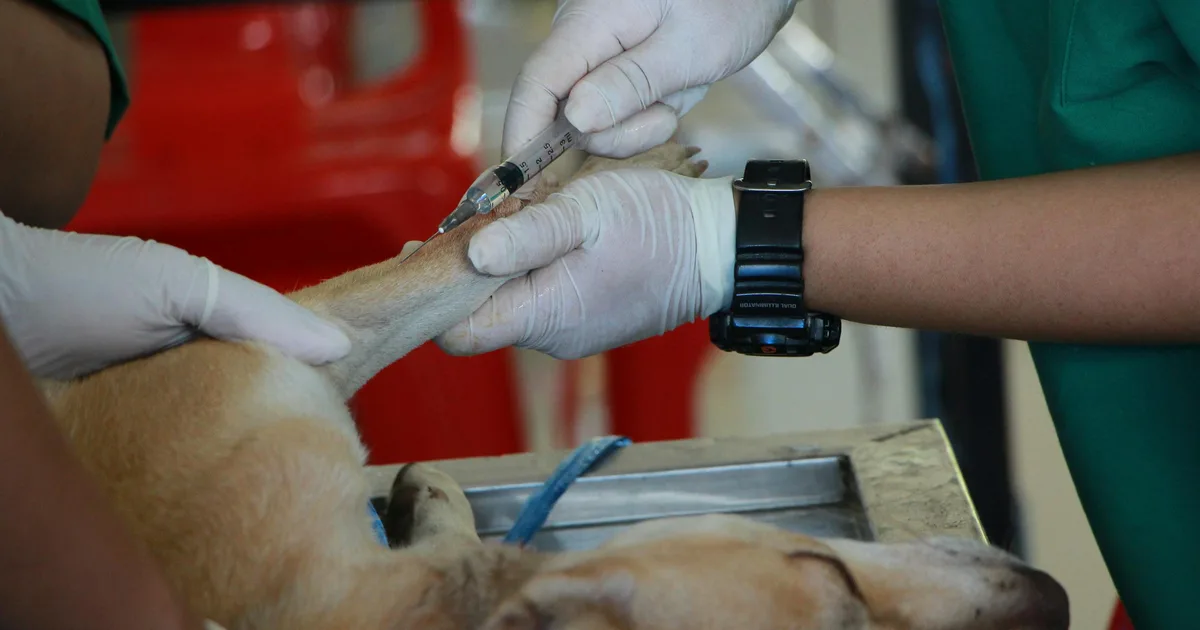
Rabies is one of the few infectious diseases that remains practically 100% fatal once symptoms appear, in both humans and animals. It is also one of the only ones that can be completely prevented with a single inexpensive vaccine that lasts a year. That is why Mexican law makes it mandatory for all dogs and cats: vaccinating them is not just caring for them, it protects your family and community.
This guide explains exactly what rabies is, why the vaccine is mandatory in Baja California, at what age it is applied, what boosters it requires, and what happens legally if you do not apply it.
What is rabies and why does it matter?
Rabies is a viral disease that attacks the central nervous system. It is transmitted by the saliva of an infected animal, almost always through a bite. Once the virus reaches the brain and symptoms appear, there is no cure: the outcome is death within days.
Although Mexico eliminated dog-transmitted rabies as a public health problem in 2019, rabies is still present in wildlife (bats, skunks, raccoons, coyotes). An unvaccinated dog or cat that contacts one of these animals can contract it and transmit it to humans.
Is it really mandatory by law?
Yes. Three regulatory levels coincide:
- NOM-011-SSA2-2011 (Official Mexican Standard): requires rabies vaccination for all dogs and cats as a national health measure.
- Baja California State Health Law: makes the owner responsible for keeping rabies vaccination current.
- Ensenada municipal regulation: conditions pet registration and allows fines or seizure if a loose pet lacks a current rabies certificate.
In practice, this means not vaccinating your pet is not only a health risk but a legal infraction with financial consequences.
At what age is the rabies vaccine applied?
First dose: 12 to 16 weeks
Both dogs and cats receive their first rabies vaccine between 3 and 4 months of age, ideally as part of the initial puppy schedule. Before that age, maternal antibodies can interfere with the immune response.
First booster: at 12 months
Twelve months after the first dose, a booster is applied. This booster typically activates long-lasting immunity.
Subsequent boosters: annual
After the first booster, the vaccine is applied every 12 months. Some modern brands have protection verified up to 3 years, but in Mexico most health authorities require the annual seal to keep the certificate current, so the generalized practice remains annual.
What vaccine is used in Mexico?
Rabies vaccines used in veterinary clinics in Mexico are inactivated (the virus is dead and cannot cause disease). The most common brands include Defensor, Nobivac Rabies, Rabigen Mono, and Eurican Herpes. Your veterinarian chooses the brand based on availability, animal age, and need for long-duration protection.
A critical point: the rabies vaccine requires strict cold chain (constant refrigeration between 2 and 8°C). A vaccine that lost the cold chain may not work and leave your pet unprotected without notice. That is why applying it in clinics with proper facilities matters.
What happens if I do not vaccinate my pet?
Consequences are of three kinds:
Health consequences
Your pet can contract rabies and die. Before dying, it can transmit the virus to your family. A single human exposure (a bite, a scratch with saliva on the wound) requires immunoglobulin treatment and post-exposure vaccine series, a costly, painful process only effective if started quickly.
Legal consequences
In Ensenada, if an unvaccinated pet bites someone or escapes, the owner is civilly and administratively responsible. Authorities may impose fines, seize the animal for mandatory 10-day observation, or even euthanize if rabies is clinically suspected.
Practical restrictions
Without a current rabies certificate, your pet cannot:
- Register at the municipality.
- Travel to the United States, Canada, European Union, or almost any country.
- Enter pet hotels or dog-walker services.
- Receive elective surgery at many clinics (including Medical Pets), as it is considered a health risk for staff.
My pet is years old and I never vaccinated. What do I do?
Good news: unlike the polyvalent schedule, rabies does not need "restarting" if you are behind. A single dose is enough to activate immunity, followed by a booster in 12 months. From there, follow the normal annual cycle.
This applies to adult dogs and cats as well as rescued or adopted pets without history.
Free brigades vs clinic vaccination
Baja California municipalities organize free rabies vaccination brigades several times a year. They are an excellent option to immunize your pet if you have no other way. However:
- The vaccine brand used in brigades may vary.
- Each dose is not always recorded in an individual official booklet.
- The certificate issued at brigades is sometimes NOT accepted for international travel, surgery, or boarding paperwork.
- It does not include clinical examination of the animal: if your pet is sick or has another condition, a brigade will not detect it.
If your pet travels, will have surgery, or needs an official certificate for paperwork, the recommendation is to vaccinate at a veterinary clinic where they issue an individual certificate with veterinarian signature, batch, and expiration date.
Where to apply the rabies vaccine with official certificate in Ensenada?
At Medical Pets Ensenada we apply the rabies vaccine with certified brands, guaranteed cold chain, and issue an official certificate with the signature and license of MVZ. Areli Priscila Caballero Rodríguez, valid for municipal paperwork, international travel, boarding, and surgery.
If your pet already has the schedule started, we can also apply only the annual booster. Schedule your appointment or contact us by WhatsApp for available days.
Frequently asked questions
Can my puppy get rabies if bitten by a stray dog?
Yes, if the stray is infected, although actual probability depends on the area. In Baja California rabies transmitted by dogs has been very rare since 2019, but cases exist in wildlife. If your puppy was bitten, take the animal to the veterinarian and ask authorities about the aggressor.
Is rabies curable once symptoms appear?
No. Once symptoms appear (behavior changes, aggression, paralysis), rabies is practically 100% fatal in both animals and humans. That is why prevention through vaccination is the only effective strategy.
Does the rabies vaccine have serious side effects?
Very rare. Most pets only show mild local swelling and drowsiness the first 24 hours. Serious allergic reactions are possible but uncommon; they manifest within 30 minutes after application, so we recommend staying at the clinic during that time after the first dose.
How often is the booster applied?
Every 12 months in Mexico. Although some modern brands have protection up to 3 years, Mexican health authorities require the annual seal to consider the certificate current, so the standard practice is yearly vaccination.
Is it safe to vaccinate geriatric pets?
Yes. An older pet or one with chronic disease can and should continue receiving the annual rabies booster. In very sick dogs and cats or those with compromised immune systems, the veterinarian evaluates case by case, but as a general rule rabies is maintained throughout life.
What do I do if my dog bit someone and is not vaccinated against rabies?
Take the dog immediately to a veterinarian or local health authority. Regulations require mandatory 10-day observation of the animal to rule out rabies. If the dog shows no symptoms in that period, there was no rabies. The bitten person should go to a health center to evaluate post-exposure prophylaxis.