
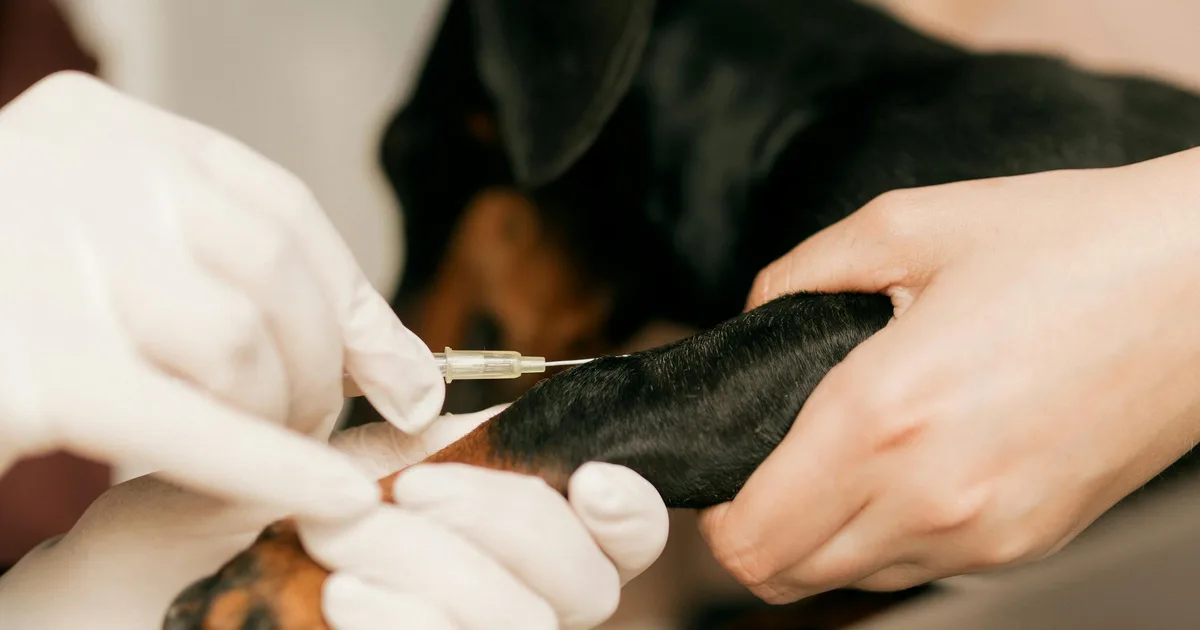
The first months of a puppy's life are critical: their immune system is still developing and, once they lose the protection from their mother, they become exposed to serious diseases like distemper and parvovirus. The most effective, safe, and affordable way to prevent illness is following a well-planned vaccination schedule from the first weeks.
This guide explains which vaccines a puppy should receive in Ensenada, at what age, which are mandatory by law in Baja California, and what to do if you fall behind.
When to start vaccinating a puppy?
Puppies are born with antibodies passed through the mother's milk that protect them during the first 6 to 8 weeks of life. After that, this immunity fades and it is necessary to activate the puppy's own immunity through vaccines.
General rule for dogs: the first vaccine is given between 6 and 8 weeks of age. The schedule is similar for kittens. Applying it earlier can be counterproductive because circulating maternal antibodies interfere with the immune response to the vaccine.
Recommended canine vaccination schedule
This is the most common schedule used by veterinarians in Baja California for healthy puppies without special background. Exact dates and vaccine brands may vary based on your veterinarian's evaluation.
6 to 8 weeks — first polyvalent dose
Polyvalent vaccine (sometimes called 5-way or 6-way) that protects against distemper, parvovirus, infectious canine hepatitis, parainfluenza and, depending on the brand, coronavirus and/or leptospirosis. The first foundational barrier.
10 to 12 weeks — second polyvalent dose + leptospira
Booster of the polyvalent vaccine. If the first dose did not include leptospirosis, it is added now. Leptospira is especially important in humid areas with rodent presence, frequent in Ensenada coastal neighborhoods.
14 to 16 weeks — third dose + rabies
Last dose of the initial polyvalent schedule. The rabies vaccine is also applied at this age, which is mandatory by law in Baja California for all dogs and cats. Without it, no official documentation can be issued and crossing borders is impossible.
Annual boosters
After the initial schedule, your pet needs boosters every 12 months (polyvalent + rabies) throughout life. Some modern vaccines offer up to 3-year protection; your veterinarian will advise when it is safe to space them.
Feline vaccination schedule
Cats follow a parallel schedule with species-specific vaccines:
- 6 to 8 weeks: first feline triple dose (rhinotracheitis, calicivirus, panleukopenia).
- 10 to 12 weeks: feline triple booster.
- 14 to 16 weeks: rabies (mandatory in cats too) and, if applicable, feline leukemia (FeLV) vaccine for outdoor cats.
- Annual: triple + rabies booster.
What diseases do these vaccines prevent?
Each vaccine protects against real and potentially fatal diseases still circulating in Mexico:
- Distemper: respiratory and neurological virus, fatal in unvaccinated puppies.
- Canine parvovirus: causes severe hemorrhagic diarrhea; mortality above 80% without intensive treatment.
- Infectious canine hepatitis: attacks liver, eyes, and kidneys.
- Leptospirosis: bacteria transmitted by rodent urine; affects kidneys and is zoonotic (transmissible to humans).
- Rabies: 100% fatal once symptoms appear. Zoonotic.
- Feline panleukopenia: equivalent to parvovirus in cats, equally serious.
Rabies vaccine: mandatory by law
In Baja California, the State Health Law and municipal regulations require rabies vaccination for all dogs and cats starting at 3 months of age, with an annual booster. This vaccine protects your pet, your family, and the community, since rabies is transmissible to humans and almost always fatal.
The official rabies certificate is also required to:
- Register your pet at the municipality.
- Travel to the United States or any other country.
- Enroll your pet in pet hotels and dog-walker services.
- Access surgical procedures or hospitalization at veterinary clinics.
What if I am behind on the schedule?
If your puppy missed the next dose, you can usually continue the schedule from where it was left if the delay is less than 6 weeks. If several months passed, the safest option is to restart the full schedule for effective protection. Your veterinarian will evaluate case by case.
Aftercare after vaccination
It is normal for your puppy to show mild reactions during 24 to 48 hours:
- Drowsiness or lower energy.
- Mild swelling or tenderness at the injection site.
- Slight decrease in appetite.
These reactions are mild and resolve on their own. However, call your veterinarian immediately if your puppy shows: repeated vomiting, diarrhea, breathing difficulty, facial swelling, or loss of consciousness. Severe allergic reactions are rare but require urgent care.
Can I walk my puppy before the vaccines are complete?
Until completing the third dose (around 16 weeks), your puppy should not be in contact with unknown dogs or places where unvaccinated dogs defecate: parks, busy sidewalks, beaches. Parvovirus, in particular, survives months in the environment.
What you can (and should) do is socialize safely: carry them on short walks, invite vaccinated healthy dogs to your home, expose them to household stimuli, and train basic commands. Early socialization is key to preventing behavior problems in adulthood.
Where to vaccinate your puppy in Ensenada?
At Medical Pets Ensenada we apply canine and feline vaccination schedules with certified vaccines, record each dose in an official booklet, and issue the rabies certificate required for legal procedures and travel. Dr. Areli Priscila Caballero Rodríguez and our team guide you based on age, history, and lifestyle.
Schedule your puppy's first vaccine or call us for an assessment if your pet has been months without vaccines.
Frequently asked questions
Is vaccinating my dog or cat mandatory in Ensenada?
The rabies vaccine is mandatory by state law in Baja California for dogs and cats from 3 months of age, with annual booster. Other vaccines (canine polyvalent and feline triple) are not legally required, but are highly recommended and essential for boarding, travel, surgery, and any veterinary service.
How many vaccines does a puppy need total?
For dogs, the complete first-year schedule is typically 3 polyvalent doses (at 6-8, 10-12 and 14-16 weeks) plus rabies (at 16 weeks). For cats, 2-3 doses of feline triple plus rabies. After that, an annual booster is given for life.
Can my puppy be vaccinated if it has fleas or worms?
It is not ideal. The vaccine stimulates the immune system, and if the puppy is parasitized the effect may be reduced. Before the first vaccine we perform internal deworming and check for fleas or other external parasites. Once controlled, we proceed with the vaccine.
Do vaccines have side effects?
Most puppies only show mild drowsiness or slight swelling at the injection site for 24 to 48 hours. Severe allergic reactions are very uncommon but possible; we recommend staying 15 to 20 minutes at the clinic after the first dose to monitor.
What if I forgot the annual booster?
If the delay is a few weeks, the booster is given and you continue with the annual schedule. If more than 6 to 12 months passed, your veterinarian will decide between a single dose or restarting the schedule based on history and the specific vaccine. Call us to evaluate.
How much does it cost to vaccinate a puppy at Medical Pets?
Cost varies by vaccine type and brand. We offer first-year complete schedule packages that are more affordable than separate doses. Send us a WhatsApp or schedule an assessment for the current price.